
Finding the Right Light: Planning for Lighting Justice
Streetlights are easy to overlook until they stop working. In Oakland, residents, advocates, and planners are rethinking public lighting as a planning issue, asking what it would mean to make the everyday decisions about lighting infrastructure more responsive to the communities it serves.
By Lisa Tran
Street lights are among the most ubiquitous pieces of urban infrastructure, yet we rarely ask who they serve or who gets to decide how cities are lit. Oakland has about 38,000, Los Angeles has over 223,000, and New York has nearly 400,000. Despite its ubiquity and critical importance to urban health and safety, street light planning is seldom discussed in city planning practice.
I suspect lighting justice has received relatively limited attention in planning because street lighting has historically been treated primarily as an engineering issue rather than as a spatial planning and social policy concern. Responsibility is also distributed across lighting designers, engineers, public works departments, and planners, which can make the issue difficult for any one field to claim. Street lighting has often been approached through lighting design and transportation engineering, with an emphasis on technical performance and roadway safety. Planning brings a different set of questions to light(ing), particularly how public investment is distributed and how lighting shapes equitable access to public space. In California, limited funding for streetlight maintenance and improvement may also have reduced institutional attention to lighting as a broader planning or equity issue. The purpose of my essay is thus to make lighting visible as a planning problem by reframing it as a social and distributive justice issue, particularly one of equitable access to public space. My hope is that this framing makes street lighting more legible to planners as a spatial planning and social policy problem and clarifies where planning intervention may be warranted.
Street lighting is a lighting justice issue. Rooted in environmental justice principles, lighting justice is “the practice of planning, designing, implementing, and investing in lighting for historically marginalized communities through inclusive stakeholder engagement and mutual respect.” Lighting injustice may occur through underlighting or overlighting–whether purposeful or through neglect. Both have adverse consequences on people, species, and the overall environment, including triggering mental illnesses and migratory pattern disruption. One study found that communities of color are overexposed to artificial lighting at night at higher rates than white communities, and another found that Black communities experience higher rates of crashes under unlighted conditions compared to white communities.
For planners, lighting justice makes visible a particular form of urban inequality: some communities are left in the dark, while others cannot escape the light. The concept offers planners a framework for thinking reflexively about how lighting decisions can address both underlighting and overlighting. For example, planners seeking to center lighting justice in practice might consider adoption of pedestrian safety criteria by the Illuminating Engineering Society and tools such as Night Light Walks, as I explain more below. At a minimum, lighting conditions should be appropriate to their intended purpose and designed with human health, community needs, and environmental impacts in mind. To better understand how these issues emerge in practice, I spoke with 7th Street Thrives, a community-based organization working to revitalize 7th Street as a Black arts, business, and cultural district. My conversations with staff from City of Oakland’s Department of Transportation (OakDot), which centered around the operations and maintenance of street lights, also highlighted issues with 311 reports (non-emergency reports citizens make to local governments), similar to 7th Street Thrives. This article uses Oakland as a local case to examine how planners can understand and operationalize lighting justice.
It starts with an accurate inventory
Based on interviews with staff from OakDOT, the City of Berkeley Public Works Department, as well as informal discussions with former employees of other cities, it appears that it is not uncommon for municipalities to rely on 311 reports for street lighting repairs. In the absence of networked controls, 311 reports are a viable, though limited, cost-minimizing option leveraging an existing tool used for reporting other public works-related repairs.
311 reports are only as helpful as the underlying inventory map and data. Interviews with 7th Street Thrives and OakDOT staff highlighted challenges with both reporting street light outages and issues, and responding to 311 reports for repairs. 7th Street Thrives encountered difficulties with identifying the correct label for the street light — whether missing, obscured, or outdated. Inaccuracies between the street light identification label and the street light map further complicated the ability of OakDOT staff to respond to repairs, as additional due diligence is required to confirm the request. Spatial analysis and field observations revealed that 5,226 of Oakland’s 30,000 street lights were missing wattage information, half of which are pedestrian-level lighting, which is the main source of lighting in Downtown Oakland and the Oakland hills.
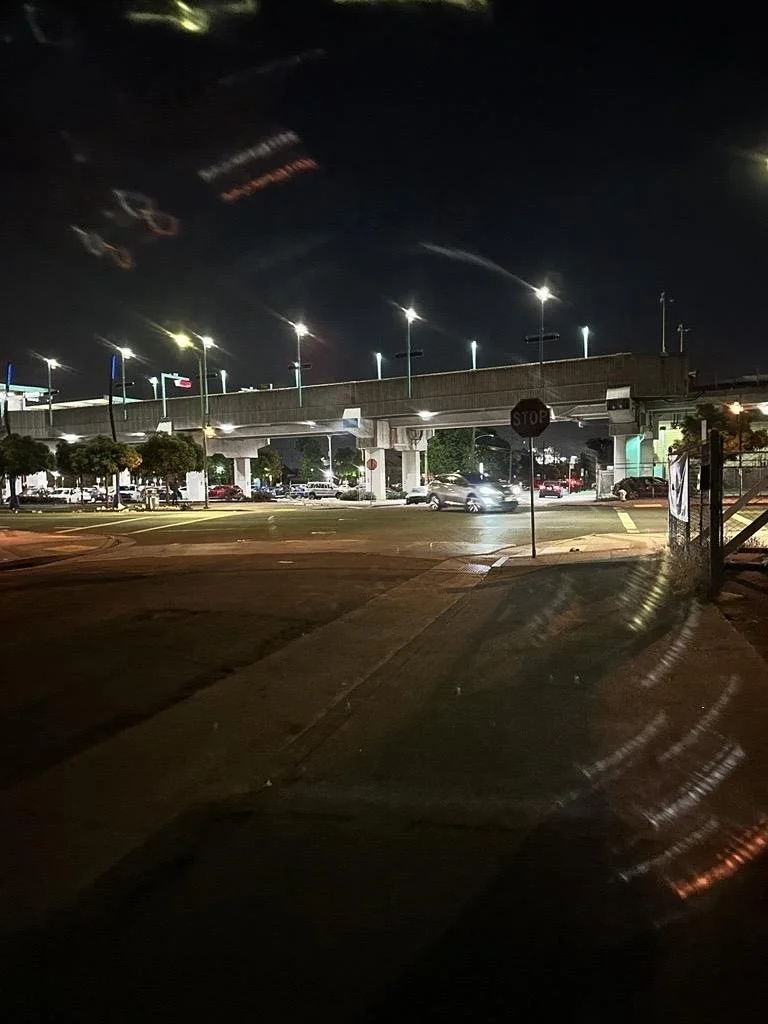
Figure 1: Lighting along 7th Street is uneven, reliant on median lighting for certain sections of the corridor, with dark spots in others. (Source: Ruth Meza)
Lighting warrants should be research-informed and consistent with other planning documents
While lighting warrants are updated less frequently compared to other planning documents, municipalities should ensure that they are updated with significant changes, such as technological innovation and better understanding around pedestrian safety. The transition from HPS luminaires to LED marked one such transition. As the blue cast of LEDs has been known to disrupt circadian rhythms and have adverse health consequences, recommended correlated color temperature (CCT) ranges have been incorporated into lighting guidelines such as in the US Federal Highway Administration’s Pedestrian Primer. Studies have also found that adequate lighting conditions matter most at high conflict areas, such as at midblock crossings and intersections.
The latest accessible version of Oakland’s Street Lighting Warrants is from 1999, so it does not reflect updates related to LED luminaires or high conflict areas, which prominently emerged with Vision Zero and the Safe System Approach. Oakland’s Light Warrant specifies lighting criteria based on where the roadways intersect–commercial, residential, or intermediate, and even “crime,” “industrial” and “transit access.” However, there are no easily accessible publicly available maps or resources to understand what has been designated as an “intermediate” area or “crime” area. Without clear supportive resources to identify the locations of these other designations, it is difficult to monitor the lighting conditions of these areas against the lighting warrants, and thus make appropriate changes and determine potential inequitable consequences. Are “crime” areas disproportionately represented in low-income and high-priority areas? If so, are the residents of those areas exposed to higher levels of light pollution?
Using Night Light Walks as a Planning Tool
Light Justice, a forum founded by Edward Bartholomew, Mark Loeffler, and Lya S. Osborn for lighting professionals to share information and ideas about lighting justice issues, opportunities, and actions describes Night Light Walks (Night Walks) as an avenue “where stakeholders can observe existing lighting conditions in their neighborhood [...] [and] other sites to experience quality lighting. This hands-on experience fosters a deeper understanding of the impact of lighting, while also building a shared language and advocacy around the good lighting that all communities deserve.” Through knowledge-sharing on these night walks, stakeholders gain the language to express the light qualities they want (and don’t want) in their communities.
Quantitative metrics are necessary, but the quality of lighting impacts safety and the perception of safety, which impacts behavior. We conducted a Night Walk along the 7th Street corridor to bring Light Justice’s work and lens to Oakland’s context. The corridor was selected as it has the robust support of 7th Street Thrives, to advocate for the surrounding residents and local businesses, and as an area that has unfortunately experienced a disproportionate amount of street light outages.
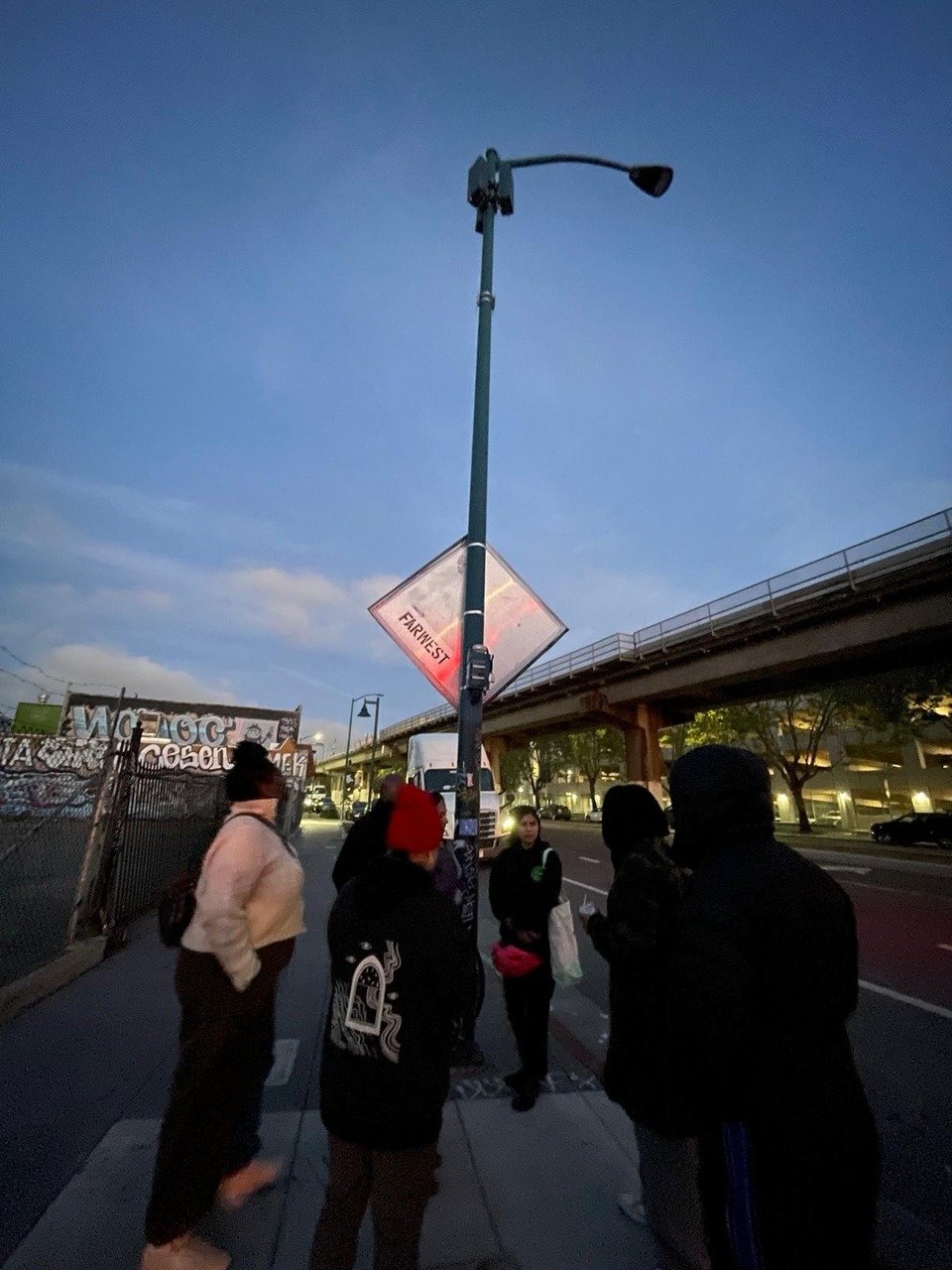
Figure 2: At the start of our walk, we noticed that this street light was not yet lit, even though the sun was setting. It turned on about 5 minutes later, when conditions were quite dark, and there were no other forms of lighting at this crosswalk. (Source: Author)
Our walk began at Wood and 7th to Center, and 7th and looped around the other side of 7th Street, back to Wood. As a lighting design professional, Neha Sivaprasad of Light Justice explained the various light treatments, and Noni Sessions and Sasha Werblin of 7th Street Thrives provided the context of the corridor and their experiences with lighting advocacy in the neighborhood. Looking down 7th towards Center, the level of inconsistent lighting conditions was immediately evident — from the lamp type and luminance (brightness) to lighting temperature. In the span of a few blocks, we observed LEDs, retrofitted HPS, and a few HPS; some street lights were decorative luminaire types, while others were Cobra.
While our walk was enjoyable within the group setting, the lack of uniform spacing, dark spots, and uncomfortable or inadequate lighting might have been unsettling to an individual pedestrian at night. In addition to street lights, our group observed that lighting was also impacted greatly by the surrounding building lights. Buildings with bright white flood lights created an unwelcoming atmosphere to both intentionally deter activity and potentially monitor people. Boarded-up vacant buildings cast an imposing presence, worsened without a nearby street light. In those locations, Neha shared that eye-level lighting treatments would be effective and easy treatments to counteract the lack of lighting and reflective properties of active buildings. Environmental conditions such as tree coverage impacted not only sidewalk lighting, but also some traffic signs, posing even greater crash risks.
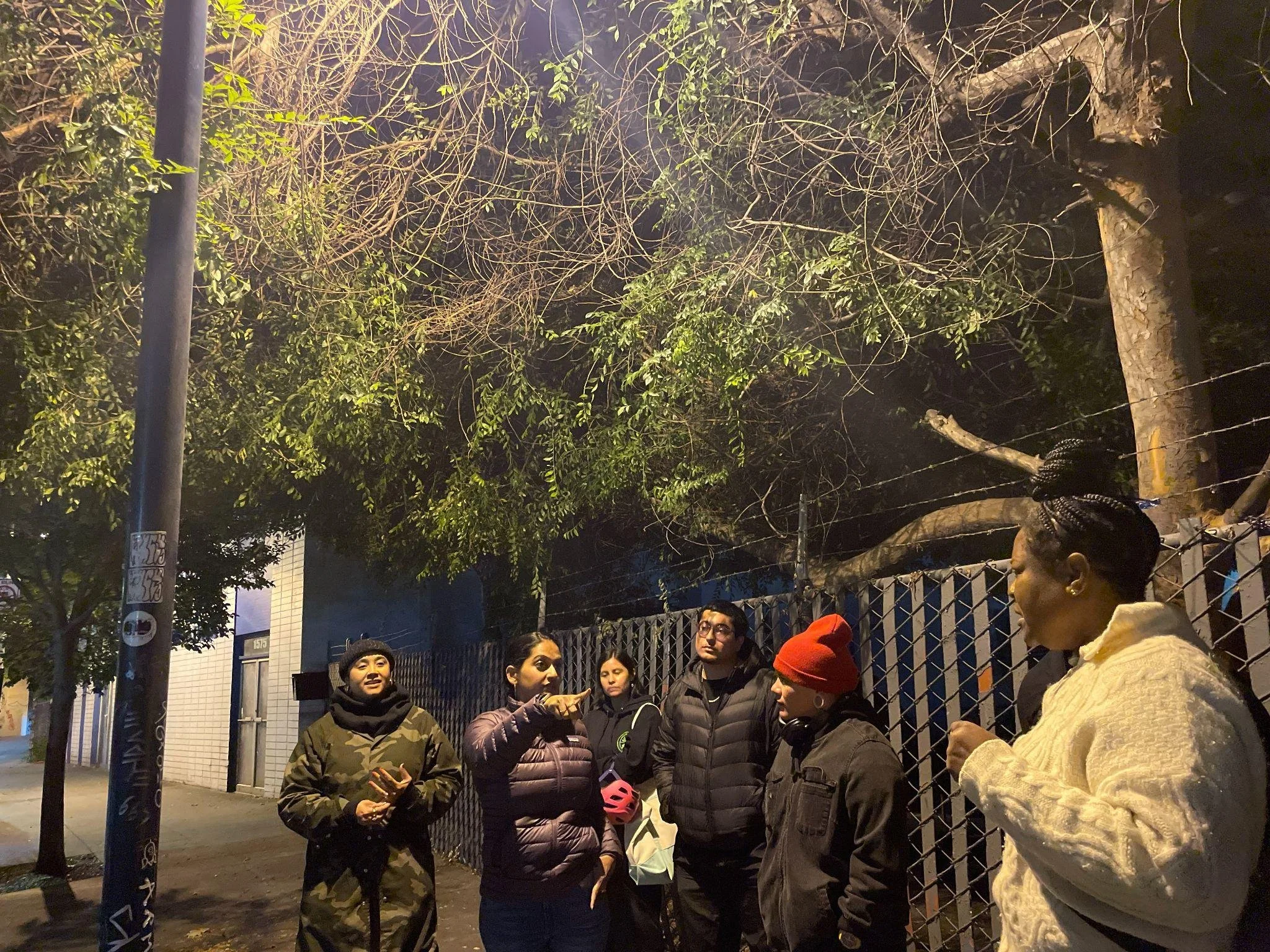
Figure 3: Neha Sivaprasad asking the group for our thoughts about lighting quality and conditions under this street light compared to a previous one. (Source: Author)
While it is unlikely that the street lights would have met the light warrant requirements, the night walk illustrated the complexities and gaps of street lighting. The light qualities of the corridor cannot be adequately and completely captured without walking and experiencing the area at night. Planners do community walk audits during the day, but we are failing to serve residents who walk at night by neglecting to conduct night light walks.
Lighting is Planning
My call to planners is simple: treat street lighting as part of planning for public space, particularly when making decisions about where lighting is provided and how public investment is distributed. Lighting shapes how people access and experience public space. It should therefore be treated as a planning problem with implications for equity and public investment, not just as an engineering one.
We now have the methods and data to evaluate how street lighting affects safety and comfort while also accounting for health and environmental impacts, including measures of lighting levels, uniformity, glare, and pedestrian visibility, alongside spatial data and community-based methods that capture how people experience lighting. The challenge is putting this knowledge into practice through intentional planning. Planners can do so by incorporating research-informed standards into lighting plans, ensuring that lighting is implemented and maintained as designed, and using night light walks to involve community members in identifying how lighting conditions shape their use of public space. Public engagement and education can also help build support for investment, since municipalities need sustainable funding and operating models to ensure reliable lighting over the long term. The next step for planners is to make lighting justice a more routine part of their decisions about public space.
LISA TRAN is a Master of City Planning graduate (Class of 2026) from the University of California, Berkeley, where she focused on housing and transportation. This blog post is based on her capstone that examined the planning and implementation of street lighting and pedestrian safety in the City of Oakland.
The author would like to thank Aaditee K. Shankar and Emma Goh for their thoughtful feedback on earlier drafts as well as everyone who had helped with her original capstone, which was necessary to make this piece possible.
